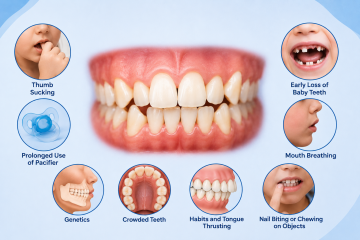
No, current dental research does not support the long-standing belief that wisdom teeth push your other teeth out of line. For decades this was accepted as fact, but longer, more rigorous studies have since overturned it. Understanding what wisdom teeth can and cannot do helps you make an informed decision about your smile, rather than an anxious one.
Do Wisdom Teeth Really Cause Crowded Teeth?
Not directly. Studies comparing people with and without wisdom teeth have found no reliable difference in the amount of front-tooth crowding that develops over time. Teeth naturally drift as we get older, whether wisdom teeth are present or not. Factors such as tooth size, tooth shape and jaw growth are thought to have a much greater influence.Where the Wisdom Tooth Theory Came From
The idea traces back to a 1962 study in the Angle Orthodontist journal, which suggested an erupting lower wisdom tooth could exert enough pressure to push the front teeth together. The theory was widely repeated for years, leading many dentists to recommend routine extraction to prevent crowding.What This Means for You
A healthy, correctly positioned wisdom tooth is unlikely to be the reason your smile has shifted. Longer-term research found that crowding relapse is more closely linked to natural ageing and to how consistently a retainer was worn, not to wisdom teeth. Many orthodontists no longer recommend removing healthy wisdom teeth purely to prevent crowding, although individual clinical opinion can vary and every case should be assessed on its own merits.When Wisdom Teeth Do Need Attention
Although wisdom teeth rarely cause crowding, they can still cause problems when there is not enough room for them to come through properly. Recognised, evidence-based reasons for removal include:- Repeated infection or swelling around the tooth.
- Decay in the wisdom tooth or the tooth in front of it.
- Cysts forming around a tooth that has not fully erupted.
- Damage to the roots of neighbouring teeth.