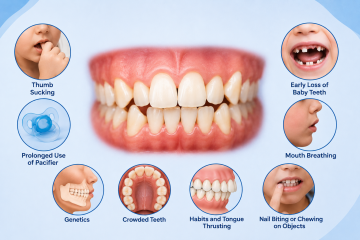
Yes, in most cases. Dental research consistently shows that crowding and misalignment do not correct themselves and tend to progress gradually rather than staying still. That does not mean every case needs urgent treatment, but it does mean that “wait and see” is rarely a neutral choice.
Do Teeth Alignment Problems Really Worsen Without Treatment?
Generally, yes. Studies of dental crowding describe it as a condition that is not self-correcting and tends to become more pronounced with age rather than improving on its own. The changes are usually gradual, so you may not notice them from one day to the next. Often, people only realise their teeth have shifted when they compare their smile with how it looked several years ago.
Why Misaligned Teeth Tend to Change Over Time
The main driver is limited space. As the jaw and dental arch change shape slightly with age, the space available for each tooth can reduce, and crowding that was mild can become more noticeable.
The Role of Natural Tooth Movement and Ageing
Teeth are not fixed in place for life. Changes in tooth position can continue throughout life and are considered normal, even for people who have never had orthodontic treatment. Everyday forces from chewing and talking, combined with these natural changes, can gradually push teeth that are already crowded into tighter positions.
What Untreated Alignment Problems Can Lead To
Misaligned teeth are not only a cosmetic concern. Crowding and crooked teeth can also make everyday dental care more difficult. Recognized, evidence-based concerns include:
- Difficulty brushing and flossing effectively, increasing plaque build-up.
- A higher likelihood of tooth decay and gum disease.
- Uneven wear or strain certain teeth from an uneven bite.
- In some cases, difficulty chewing comfortably.
These are some of the reasons the NHS highlights that crowded or poorly aligned teeth can be harder to keep clean and more prone to damage.
Why an Earlier Assessment Tends to Help
As a general principle, addressing alignment concerns sooner rather than later can make treatment planning simpler, although this varies from person to person. Every case is different, and an assessment with a GDC-registered clinician is needed to determine whether treatment is appropriate, and which approach would be suitable.
What Are Your Options for Straighter Teeth?
If your teeth have shifted, feel more crowded, or your bite feels different to a few years ago, a clinical assessment with a specialist orthodontist is the most reliable way to understand what is happening and what your options are. NHS orthodontic treatment is mainly available to patients under 18 who meet the clinical eligibility criteria, so most adults looking for dental alignment treatment will need to consider private options such as fixed braces or clear aligners, matched to their individual assessment.
Considering Dental Alignment Treatment?
Smile Orthodontics offers consultations for anyone considering teeth straightening in Northway or fixed braces in Northway, along with our Spalding and Norwich locations. Book a consultation with us today for a clear, honest assessment of your alignment and the treatment options available to you.
FAQs
Will my teeth definitely get worse if I do not have them straightened?
Not with certainty, as every case is different, but research shows crowding and misalignment generally do not self-correct and tend to progress rather than stay the same. An assessment is the only way to know what is likely in your specific case.
Can adults get alignment treatment on the NHS?
NHS orthodontic treatment is mainly available to people under 18 who meet the clinical eligibility criteria, assessed using a recognised scoring system. Adults are usually treated privately, though your dentist can confirm whether any NHS route applies to your circumstances.
What are the signs that my alignment problem is getting worse?
Common signs include teeth that look more overlapped or rotated than before, gaps that are closing or appearing, and a bite that feels different when chewing. If you notice any of these changes, it is worth having them checked.
Does waiting longer make treatment more complicated?
As a general rule, earlier assessment tends to make planning more straightforward, though this depends on the individual case. There is no fixed timeframe, and a clinician can only advise on your options after examining your teeth and bite.
Are fixed braces still a good option for adults?
Fixed braces can be suitable for many adults, alongside options like clear aligners, depending on the alignment issue being treated. Suitability is confirmed only after a clinical assessment, as adult treatment can differ from treatment planned during childhood growth.
How do I know if I need dental alignment treatment?
The only reliable way to know is a clinical assessment. If you have noticed shifting, crowding or bite changes, book a consultation so an orthodontist can examine your teeth, jaw and bite and advise on suitable options.