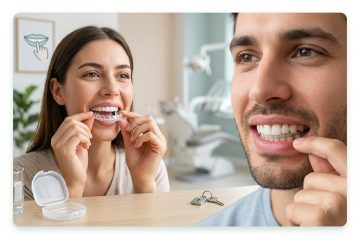
Orthodontic treatment follows a series of stages, starting with your initial consultation and ending with retention. Each stage has a different purpose, from planning your treatment and fitting your braces or aligners to keeping your teeth in their new positions afterwards.
What Happens at Your Initial Consultation?
Your first appointment is a full assessment of your teeth, jaw and bite, often including photographs, digital scans or x-rays. Your orthodontist will explain what is causing any misalignment, talk through suitable options such as fixed braces or clear aligners, covered in more detail in our clear aligners vs braces guide, and explain whether NHS treatment may be available or whether private treatment is the right route for you.
How Are Braces or Aligners Fitted?
Once your treatment plan has been agreed, your braces will be bonded to your teeth, or you will receive your first set of aligners. The appointment may take longer than a routine visit. It is also normal for your mouth to feel slightly uncomfortable or sore for a few days as you get used to the appliance.
What Happens During Active Treatment?
During active treatment, you will have regular appointments, usually every 4 to 10 weeks. These visits allow your orthodontist to adjust your wires or provide your next aligner trays, depending on your treatment. Your teeth are gradually moved towards their planned positions while your progress is checked at each appointment.
What Happens When Treatment Finishes?
Once your teeth and bite have reached the agreed goal, your braces are removed or your final aligner tray is completed. This is an exciting stage. Many patients feel an instant boost in confidence, though it is not the end of the journey, since your results still need protecting.
Why Does Retention Matter?
Retention is what keeps your new smile in place. You will usually be given a retainer, such as an essix, hawley or bonded retainer, to wear as instructed, often full time at first and then overnight. Teeth naturally continue to move throughout life, so most people who have a dental retainer are advised to keep wearing it long–term, since skipping this step risks your teeth gradually drifting back. This is also the message behind the British Orthodontic Society’s Hold That Smile campaign, which highlights why long-term retainer wear matters.
Start Your Orthodontic Journey with Smile Orthodontics
If you’re ready to start your orthodontic treatment, Smile Orthodontics can guide you through every stage, from choosing the right treatment to protecting your results with a retainer. Whether you’re considering a dental retainer in Spalding or fixed braces in Spalding, our experienced team can explain your options and what to expect.
Book a consultation to talk through your options and get a clearer idea of what your orthodontic treatment could involve.
This is general guidance only. Timings and outcomes vary between patients, and suitability for any treatment can only be confirmed after an assessment by a GDC-registered clinician.
Frequently Asked Questions
How long does orthodontic treatment usually take?
This varies by case, but active treatment often takes somewhere between several months and a couple of years, depending on the complexity of your bite. Your orthodontist can give you a personalised estimate at your consultation.
How often will I need appointments during treatment?
Most patients attend adjustment appointments roughly every 4 to 10 weeks, though your orthodontist will confirm the schedule that suits your specific treatment plan.
Do I need a retainer after braces or aligners?
Yes. Retainers hold your teeth in their new position while the surrounding bone and gum settle, and most people are advised to keep wearing one long–term, since teeth can shift at any age.
Can I get NHS orthodontic treatment?
NHS orthodontic treatment is generally assessed by clinical need and mainly available to those under 18. Adults usually need to seek treatment privately. Your dentist can advise on your eligibility.
What happens if I stop wearing my retainer?
Teeth naturally drift over time, so stopping retainer wear can allow them to gradually move back towards their original position, which may undo some of your treatment results.
What is the first step if I want to start treatment?
Book a consultation with an orthodontist, who can assess your teeth and bite and talk you through suitable options, including timescales and what to expect.